


COMPOSABLE COMMERCE
Adopt Composable to Build Your Ideal Tech Stack
Manufacturing operations cannot meet market demands with monolithic digital platforms. They must seek a composable architecture that allows them to build an ideal tech stack tailored to their business objectives, while delivering the ideal customer experience to elevate their brand.
VIDEO: CEO Shae Inglis explains what most manufacturers miss about “out-of-the-box” integrations.
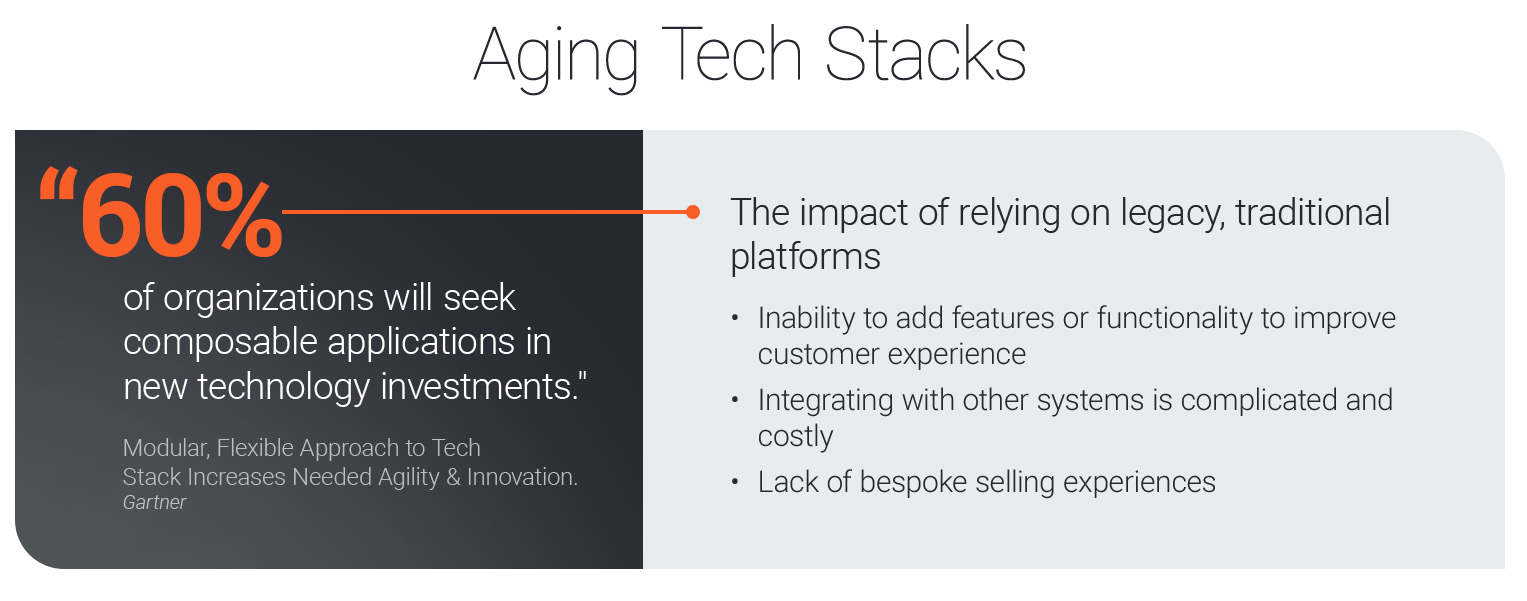
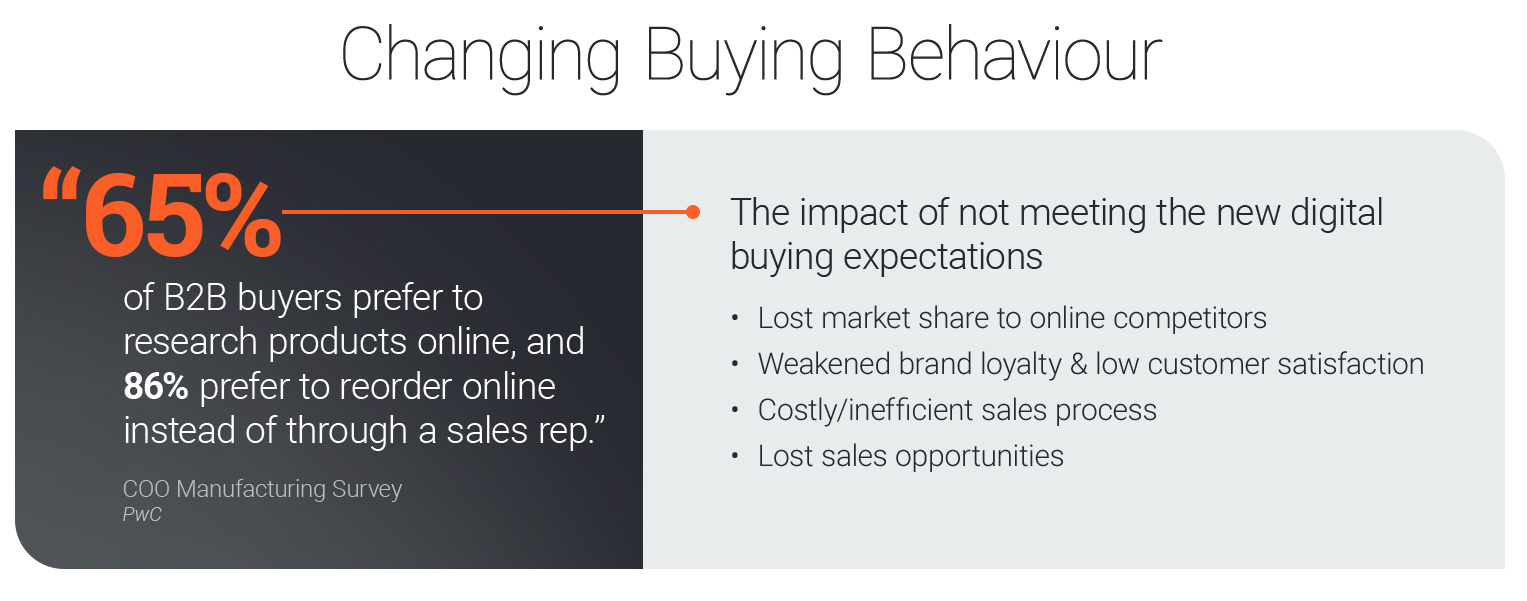
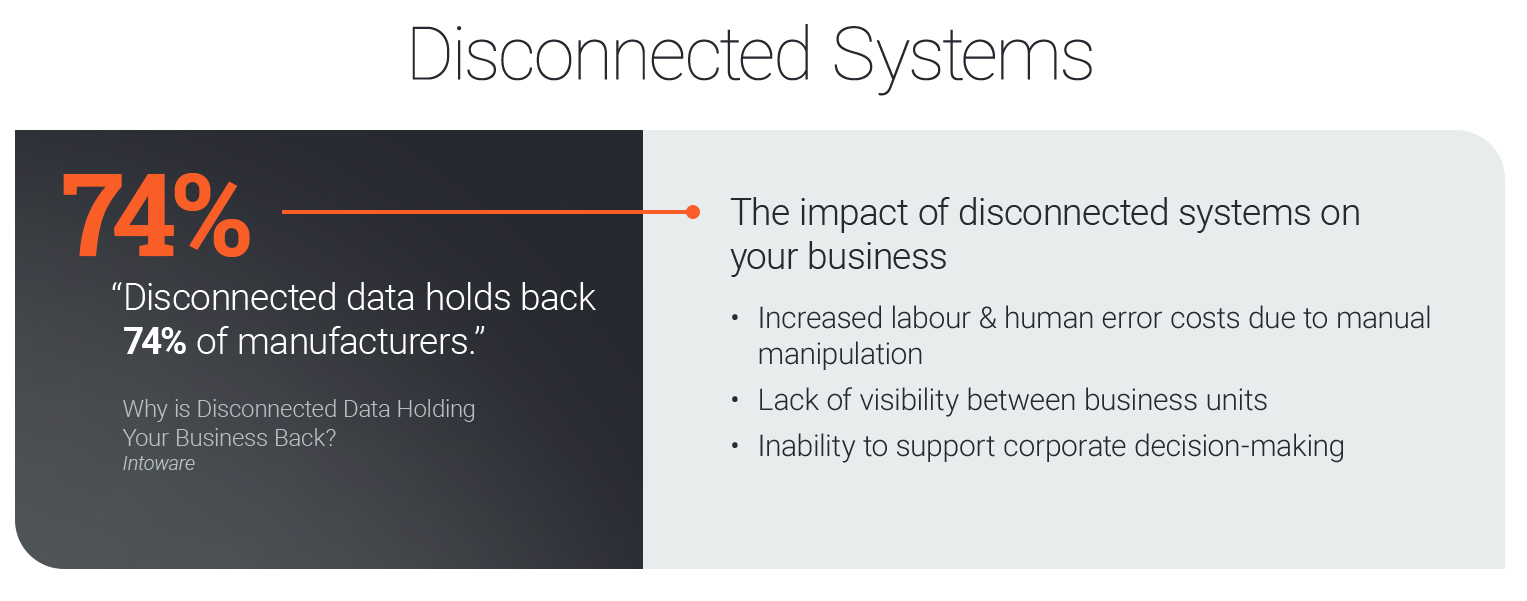
How Composable Systems Create Real Advantage
Hear how intelligent composability helps businesses integrate leading tech platforms, allowing them to leverage the individual strengths of each for unprecedented agility.
Discover how companies are achieving remarkable results by orchestrating powerhouses like Acumatica, BigCommerce, Shopify, and Storyblok, all while infusing AI with tools like Gemini.
Composable solutions can transform your business giving buyers their desired experience while improving your company’s efficiency and reducing costs.
Breaking Down a Monolith
Common Terminology
The terms decoupled and headless indicate using a modular and composable commerce solution.
- Decoupled — In a decoupled setup, the frontend experience, or the interface a customer interacts with, is separate from the backend functionality and data.
- Headless — The platform is built without a front-end experience, allowing you to add the front-end system of your choice.
- Composable — The ability of any component to be worked on, updated or removed without affecting the entire ecosystem.
- Monolithic — Large, singular, interconnected systems that have traditionally been the backbone of enterprise digital strategies, with the front and backends being tightly locked.

Composable Commerce Architecture is Based on Four Key Concepts
Decoupling Your Tech Stack is the Foundation for Scalable, Iterative Improvement
Comparing Architecture Types
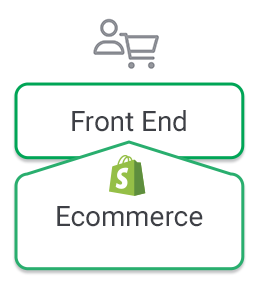
Monolithic
Limited to the platform’s data & functionality only.
This solution is just one system — a combined frontend and backend.
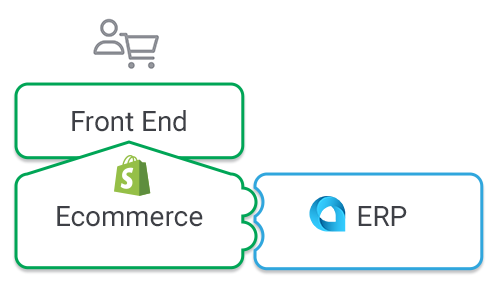
Monolithic + Back-End Integration
Data can move between back ends, but no new functionality is available on the front end.
For example, Acumatica has logic for individualized stock, but Shopify does not, so it cannot be displayed on the front end.
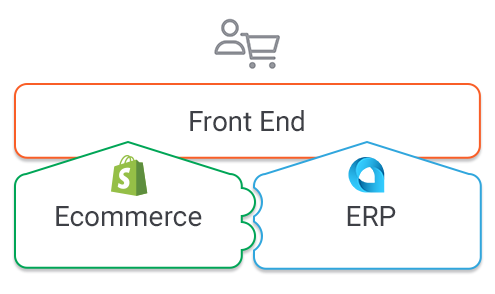
Decoupled + Headless Back Ends
This setup unlocks vast options for front-end functionality that are otherwise unavailable using a monolithic setup.
Individualized stock is not a problem in this setup.
Combining Data for Ideal Customer Experiences
The strategy behind composability is that each platform's customer experience is separated from the backend functionality. Businesses can change or add new functions without impacting or rebuilding the customer journey.
In this approach, each platform is run headlessly, meaning its functionality is leveraged without its built-in, customer-facing user interfaces. Instead, an independent front end is developed and used in its place. This new front end is called the head.
This head pulls data from various systems to populate a robust and rich customer experience.
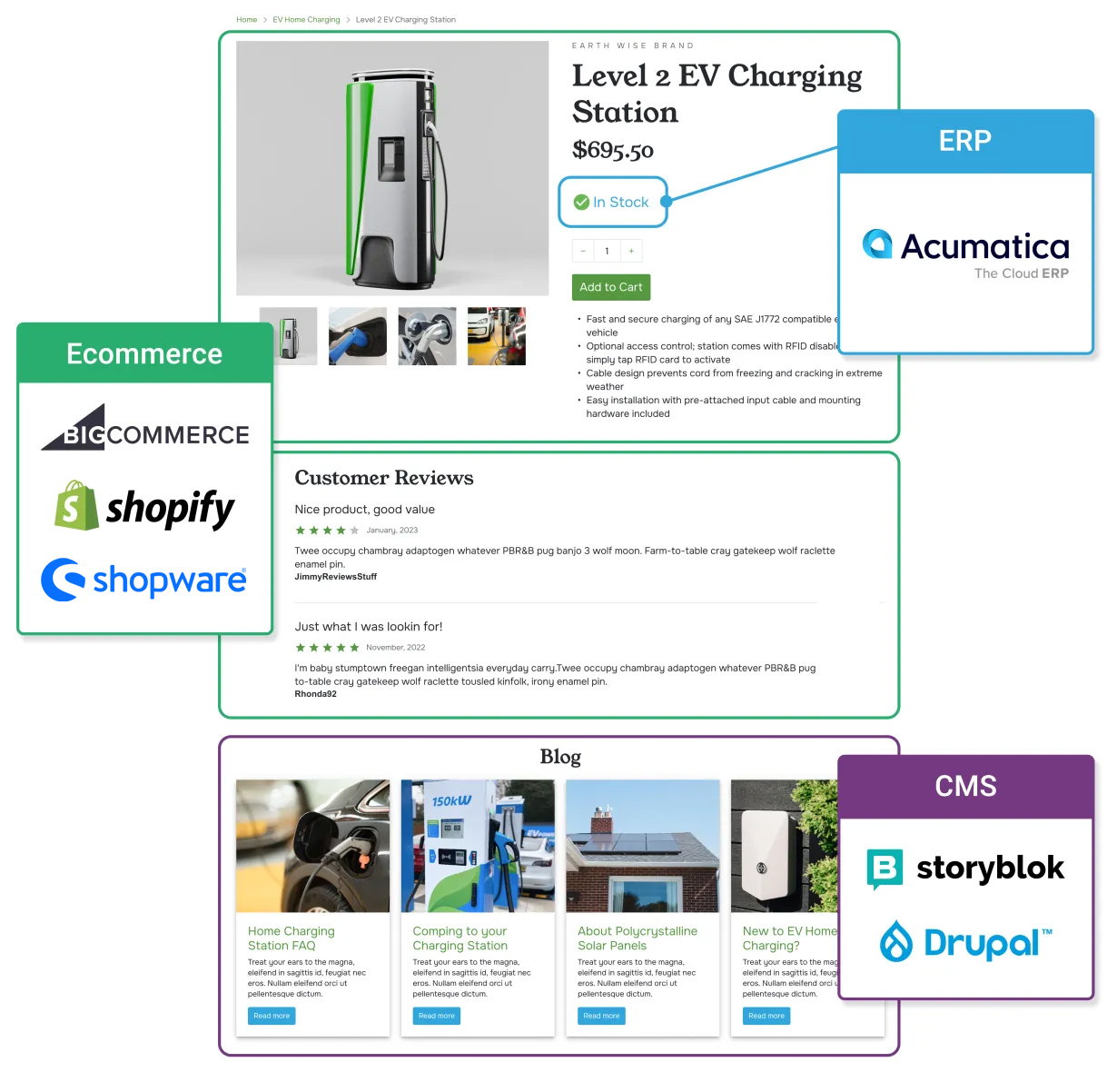
This example shows how the front-end display pulls content from an ERP like Acumatica, a commerce platform such as BigCommerce or Shopify Plus, and a CMS such as Storyblok.
Enabling Transformation with Composable Commerce
Recommendation: Composable commerce solutions allow your business to reach your clients wherever they are in a way they are accustomed to, building ideal online experiences that meet their needs while making your operations more efficient.
Adopting a composable architecture strategy empowers B2B organizations to achieve seamless integration of automated backend operations with exceptional customer experiences. This approach facilitates product showcasing through content-rich platforms, customizable branding, and self-service options that cater to customer preferences. Additionally, it enables marketing teams to launch synchronized campaigns across multiple channels, ensuring comprehensive audience reach.
Furthermore, digitizing the sales process with composable commerce solutions yields numerous advantages, including streamlined operations, reduced administrative tasks, and empowered buyers who can self-manage their purchasing journey. This enhanced efficiency and customer-centric approach are pivotal for lead generation, shortened sales cycles, and sustained business growth.
LEARN MORE ABOUT
Composable Commerce
“We wanted an agency that had the technical and design ability we needed, but more importantly, we wanted an agency that we could work with and who would be invested in the project's success. Acro Commerce worked alongside us every step of the way, and especially towards the end, they bent over backwards to make sure we finally got the website over the line.”
David Hart, Concept2

"The golden rule in Agile design has always been: you can have it fast, you can have it well priced, or you can have it high quality, but you can’t have all 3, so pick 2. Acro has been able to defy this rule on numerous occasions over the last year through Agile prioritized execution, precise, detailed planning to reduce rework, and continual validation of design to ensure business needs are being met. It is this partnership between TELUS and Acro Commerce that has kept us coming back time and time again for further development and enhancements."
Jenna Sweetland, Director of Marketing, TELUS Business

"We wanted to begin by protecting our revenue streams overall, and those associated with our digital platform. And there’s no doubt in our minds that the work Acro Commerce has done for us has provided that protection and has enabled us to grow in a couple of dimensions: one, we’re seeing growth in terms of revenue; we’re seeing growth in terms of new customer acquisition; we’re seeing growth in average order size; and we’re seeing growth indicators in areas of a satisfying customer experience."
Gregory M. Sottile, Ph.D., Director of Sales & Marketing, USI Laminate

"Overall, the engagement with Acro Commerce went really well and was well-received internally at Discover Global Network ®. The team was exceptionally professional, and even traditionally tricky items like AM/PM switches were handled well. We look forward to continuing our growing relationship with Acro Commerce as we dig deeper into the Drupal ecosystem."
Andrew Gordon, Executive Relationship Manager, Discover Global Network.
Ready for the future of B2B?
Composable and headless commerce are just the beginning.
Learn how working with Acro Commerce can:
- Improve your operational workflows.
- Future-proof your tech stack.
- Increase scalability.
- Optimize sales processes.
- Create exceptional customer experiences.